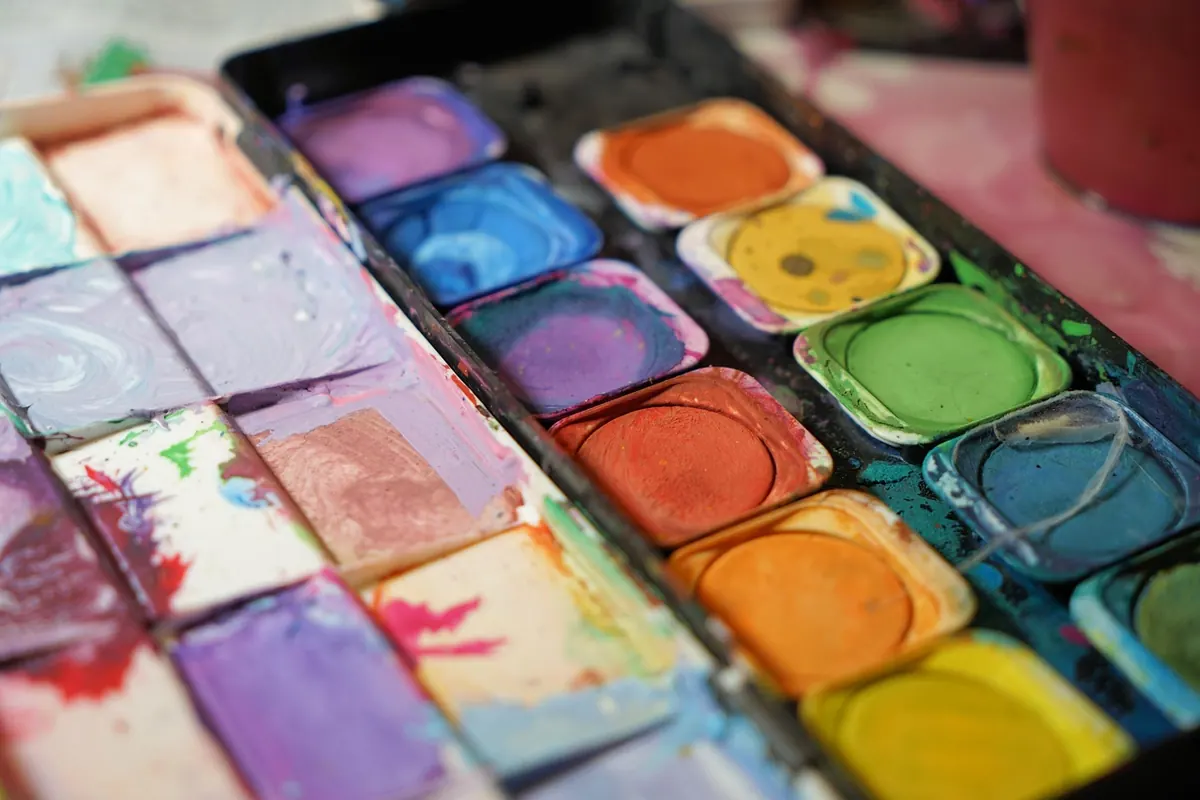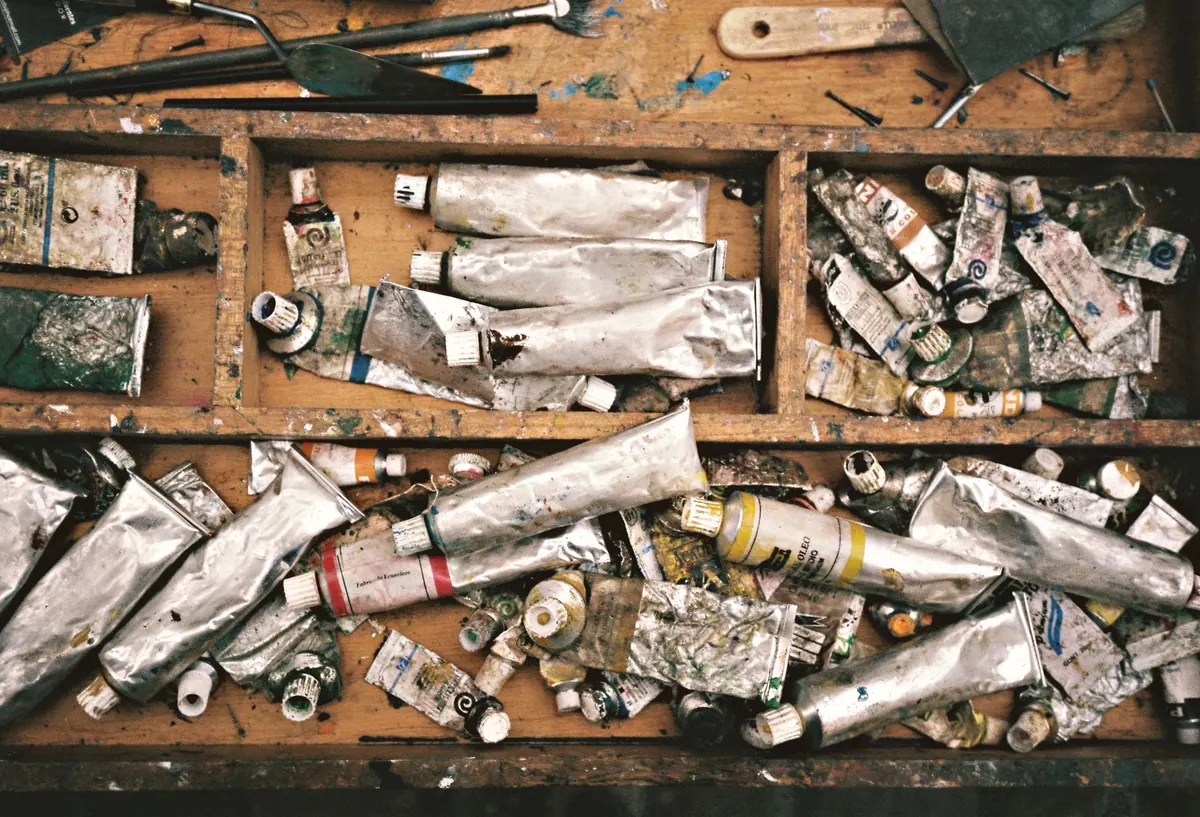
Standing in an art shop with a tube of cadmium red in one hand and its acrylic twin in the other is where a lot of beginners stall. The colours look identical. The labels don't explain much. And the advice you find online tends to come from people who have already picked a side.
The honest answer is that both are excellent, forgiving media — they simply ask different things of you. Acrylics dry fast and clean up with water. Oils dry slowly and let you push paint around for days. Which one suits you depends less on natural talent and more on how you like to work, how much space you have, and how patient you are with a brush in your hand.
Drying time, and why it changes everything
Acrylics dry by evaporation. A thin layer can be touch-dry in minutes; a thick blob may stay soft inside for longer, but the surface will skin over quickly. That speed is a gift if you like layering, glazing, or working flat with tape and stencils. It is a problem if you mix a big pile of a custom colour and then walk away for a cup of tea, because you will come back to a plastic disc.
Oils dry by oxidation — they react with oxygen in the air rather than losing water. A thin layer is often touch-dry within a day or two, and fully cured much later. That gives you hours or even days to blend an edge, soften a transition, or scrape a passage back and start again. It also means you can leave a canvas half-finished and return without a rescue operation.
Practical tip: if you love acrylics but hate the rush, buy a stay-wet palette or keep a spray bottle of water to hand. Mist the palette, cover it, and your mixed colours will usually survive into the next session.
How each medium behaves on the brush
Acrylics
Acrylic paint is pigment bound in a polymer emulsion. Straight from the tube it is buttery; thinned with water it turns runny and slightly translucent. It handles like a cross between gouache and a very fast-drying oil.
- Dries to a matte-to-satin finish, which some painters love and others find flat.
- Blending is possible, but you must work wet-into-wet quickly or add a slow-drying medium.
- Water thins it, yet too much water weakens the binder. Use a proper medium for big dilutions.
- It sticks to almost anything: canvas, board, paper, wood, fabric, even primed metal.
Oils
Oil paint is pigment bound in a drying oil, usually linseed or safflower. It stays workable for a long time, which makes blending and edge control far easier. Think of the soft transitions across a cheekbone or a cloud — that is the medium doing half the work for you.
- Rich, glossy finish with more depth of colour in thin layers.
- Cleanup needs solvents or a dedicated brush soap, plus decent ventilation.
- Layering works best “fat over lean” — oilier paint over leaner, quicker-drying layers. Ignore this and the surface may crack later, so it is worth reading up on properly.
- If you would rather avoid solvents, water-miscible oils exist, though they behave a little differently.
Cost: what actually adds up
Comparing a single tube is misleading. Acrylics are often cheaper per millilitre in student ranges, and you can skip solvents, mediums and specialist soap. But acrylics get used up fast, because they dry on the palette and in the brush, so you waste more than you might expect.
Oils cost more upfront, and you will want at least a basic medium and a jar or two of solvent. They also last longer, because you work with smaller amounts and nothing sets hard mid-session. A modest starter set of oils can easily outlive two or three acrylic kits of similar quality.
For both: buy the smallest number of decent colours you can. A split-primary set — a warm and a cool version of each primary, plus white and a couple of earths — will take you further than a large box of cheap paints.
Cleanup, safety and the space you have
Acrylic cleanup is simple: water while wet, soap and warm water if you catch a brush in time. Once it dries on a brush or palette it becomes stubborn. Keep brushes out of the water jar — resting them bristle-down in water ruins the ferrule and splays the hairs.
Oil cleanup is more involved. You wipe brushes on rags, wash with solvent or soap, then rinse. Solvents need ventilation, so work near an open window and keep containers sealed when not in use. Never pour solvent down the sink. Oily rags left in a heap can also heat up as they dry, which is a genuine fire risk in studios — spread them out flat to dry, or keep them in a sealed metal bin.
If you paint at a kitchen table, in a shared room, or anywhere without airflow, acrylics are the practical choice. If you have a spare room, a garage or a studio with a window, oils become far more appealing.
The medium you can actually use this week beats the one you would love to use next year.
Which should you start with?
The honest answer is the one that fits your week.
- Choose acrylics if you have limited time, want to learn colour and drawing quickly, work in a small space, or enjoy bold layers and graphic edges.
- Choose oils if you love slow blending, have a ventilated space, don't mind cleanup, and want to build thin, luminous layers.
- Choose either if you simply want to paint. Neither medium is more serious than the other, and plenty of professional painters move between them across a career.
You can also test both cheaply. Buy one small acrylic set and one small oil set, then paint the same simple still life twice — an apple and a mug will do. A single afternoon of comparison will tell you more than any article can.
Your first practical step
Pick a subject you can set up in five minutes: a mug, a lemon, a houseplant. Limit yourself to three colours plus white, and work on a small panel — roughly A4 is plenty. Give yourself ninety minutes and no more.
With acrylics, block in the shapes first, let them dry, then layer on top. With oils, block in roughly and spend the rest of the time softening edges and refining what is already there.
When you finish, clean up straight away, note what felt good and what felt awkward, and paint the same thing again next week. That repetition will teach you more about your chosen medium than switching between them every few days ever could. Buy the best paint you can reasonably afford, use a surface you enjoy working on, and keep your brushes clean. That is most of it.
Photo: DΛVΞ GΛRCIΛ / Pexels