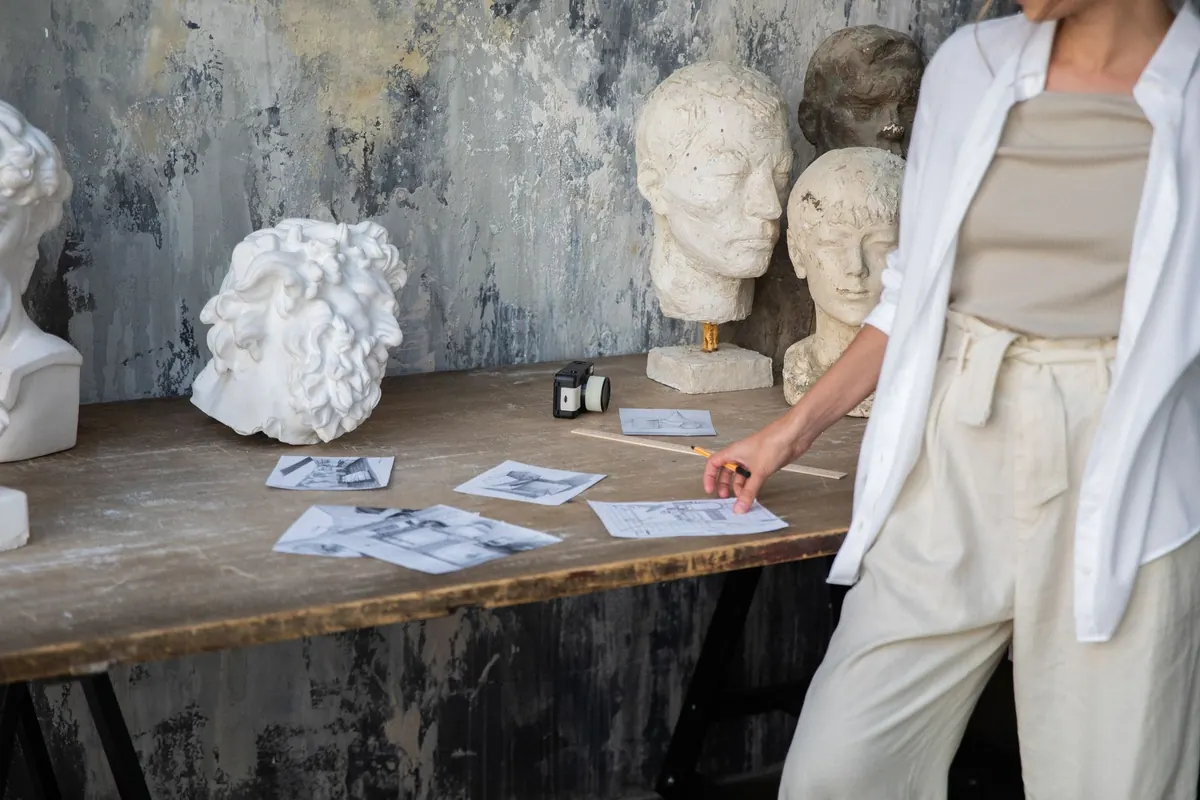
London rewards the artist who travels light. Within a few square miles you can draw a Roman helmet, a Rothko, a Tudor face and a gilded ceiling, and none of it costs a penny. The trick is knowing which rooms welcome a sketchbook, when the crowds thin out, and how to work quickly enough to leave with something worth keeping. What follows is a practical tour of galleries that suit drawing on location, plus the habits that make a session go well.
Which galleries actually welcome sketchers
Most large public museums in London allow drawing in their permanent collections with pencil and other dry media. Beyond that, rules vary by venue and change with the exhibition programme, so check the current position before you travel, especially for ticketed shows.
The pattern most places follow:
- Pencil, graphite, charcoal and fine liners are usually acceptable.
- Wet media — ink, watercolour, brush pens — usually are not, because of the risk to floors and to the works themselves.
- Easels, tripods and large boards normally need permission arranged in advance.
- Temporary exhibitions often ban sketching altogether, or restrict it to a small notebook.
- Backpacks go in the cloakroom, and you will be asked to keep bags off your shoulder.
- Staff can say no for practical reasons: a narrow doorway, a fragile object, a room full of school groups.
Asking at the information desk when you arrive takes a minute, and it tells the staff what you are doing. That courtesy matters more than you might think.
The best sketchbook page is often the one you finish before anyone notices you are there.
Tate Modern: scale, crowds and movement
The Turbine Hall is the best place in London to think about scale. You cannot fit it on a page, and that is the point: draw the sweep of the space, the staircase, the small figures crossing the floor at the far end. Further up, the collection displays reward value studies rather than careful line.
Come on a weekday morning if you can; weekends turn the building into a crush. The benches in the middle of the rooms give you a raised viewpoint, and drawing people as they look at the art is often better practice than drawing the art itself. Entry to the collection is free.
What to draw in the Turbine Hall
Treat the space as the subject. Put one vertical line on the page to fix the height of the room, then work outwards. Draw the curve of the floor, the hard edge of a balcony, the tiny figures below. Use a soft pencil and do not erase. The escalators and upper walkways give you changing viewpoints, and a single figure drawn from above can teach you more about proportion than an hour of copying a painting. If the hall is busy, draw the crowd itself: shapes, coats, shadows, movement.
Trafalgar Square: the National Gallery and the National Portrait Gallery
The National Gallery holds centuries of answers to the problems you are currently wrestling with. Want to understand drapery? Head for the Venetian rooms. Gesture and anatomy? The Italian galleries. Light and weather? The Dutch landscapes. Sit on a bench in the middle of a room and let the painting come to you.
The Arnolfini Portrait rewards close looking at hands, reflections and the sheer strangeness of ordinary objects. The Ambassadors is a lesson in surfaces, from fur to metal to the famous distorted skull. In the Spanish rooms, dark backgrounds make faces and hands glow. Work in tone rather than line: squint, find the darkest dark, and build the drawing from there.
The National Portrait Gallery, next door, is better for faces, posture and the psychology of a sitter. Draw a Tudor collar, a Regency profile, a Victorian beard, a modern self-portrait. The top-floor rooms often have good light and more seating. Both galleries are free, and both permit pencil sketching in the permanent collection. Temporary exhibitions may not, so ask first.
The British Museum: pattern, profile and the problem of too much
The British Museum is the opposite of a curated sketchbook. It is overwhelming, which is useful if you set a narrow brief. Head for the Egyptian sculpture gallery and draw a profile. Go to the Assyrian reliefs for movement and animal anatomy. The Greek vases offer line and pattern; the Great Court offers architecture, light and crowds. The Enlightenment Gallery is a cabinet of curiosities and a good place for small studies of objects in cases.
Because the collection is vast, choose one theme: hands, feet, drapery, animals or ornament. Work for twenty minutes, then move. The museum permits pencil sketching in most permanent galleries, but check before you set up. The Great Court is busiest at midday, early opening is calm, and Friday lates are social but crowded. Use a small sketchbook; large boards are impractical and may need permission.
The Victoria and Albert Museum: detail and design
The V&A is the place to study craft. The Cast Courts give you monumental sculpture and architectural fragments without leaving London. The jewellery galleries reward a fine liner and patience. The textiles and fashion rooms are good for folds, patterns and silhouettes. The ceramics galleries offer shapes you can draw in a few minutes: a handle, a rim, a foot.
The museum usually allows pencil sketching in permanent galleries. Wet media are not permitted. Some temporary exhibitions ban sketching entirely. The V&A can be quieter on weekday afternoons, especially on the upper floors. Draw the object, then draw the shadow it casts, then draw only the pattern. Three pages, one object.
Smaller rooms, sharper lessons: the Wallace Collection, Sir John Soane's Museum and the Courtauld
Big galleries teach scale; small galleries teach looking. The Wallace Collection is free, calm and full of Old Masters, armour and French furniture. It is ideal for small, careful studies of fabric, metal and gesture. Sir John Soane's Museum is a house of mirrors, domes and crowded antiquities. Sketching there is a lesson in light and compression, but space is tight and timed entry applies, so check the rules and keep your kit small. The Courtauld Gallery at Somerset House has an intimate collection of Impressionist and Post-Impressionist works. It is good for tonal notes and composition studies: how a room is arranged, how a figure is placed, how a colour repeats. All three reward a quiet weekday visit.
A sketchbook route for one day
If you have a full day, try this.
- 10am: Start at the National Gallery. Warm up with two ten-minute studies: one face, one drapery.
- 11.30am: Cross to the National Portrait Gallery. Draw three sitters in fifteen minutes each, focusing on posture.
- 1pm: Lunch in Trafalgar Square. Draw pigeons, tourists and the fourth plinth.
- 2.30pm: Walk to the Courtauld Gallery or take the Tube to the British Museum. Choose one theme and stick to it.
- 4.30pm: Finish at Tate Modern. Draw the Turbine Hall from a high balcony, then a single figure below.
If that is too much, do half. A good sketchbook session is not a marathon.
Habits that make a session work
- Set a problem before you start: “I will draw only shapes” or “I will draw only hands.”
- Work small. A5 or smaller is less intimidating and easier to finish.
- Use a viewfinder made from card or your fingers to frame a subject.
- Time yourself. Ten minutes forces decisions.
- Sit down when you can. Standing makes you rush.
- Draw the room as well as the art: benches, doorways, people, shadows.
- If a guard asks you to move, do so politely. There is always another view.
- Stop before you are tired. Leave one page unfinished on purpose.
The goal is not a masterpiece. The goal is a page that remembers what you saw.
Etiquette and kit
A small kit keeps you welcome. Bring a hardback sketchbook, two pencils (HB and 4B), a fine liner, a putty eraser, and a pencil sharpener that catches shavings. Leave ink, watercolour and brush pens at home unless the gallery explicitly allows them. Wear a bag you can keep on your lap or put in the cloakroom. Do not lean on cases, block doorways or use flash. Ask at the information desk. If you are unsure, show them your sketchbook and say what you plan to do. Most staff are helpful when they know your intentions.
Some galleries offer sketching stools or allow folding stools; most do not. Check in advance. Never assume a ticketed exhibition allows drawing, even if the permanent collection does. Rules change with loan agreements and conservation needs.
Final thoughts
London is unusually generous to the sketcher. The galleries are free, the collections are deep, and the city itself provides the crowds and light that make drawing on location so good for your eye. The best approach is simple: choose one room, one problem, one hour. Draw what is in front of you, not what you think you should draw. Come back next week and do it again. Over a season, the sketchbook becomes a record of the city and a record of your looking. That is the real exhibition.
Photo: KATRIN BOLOVTSOVA / Pexels